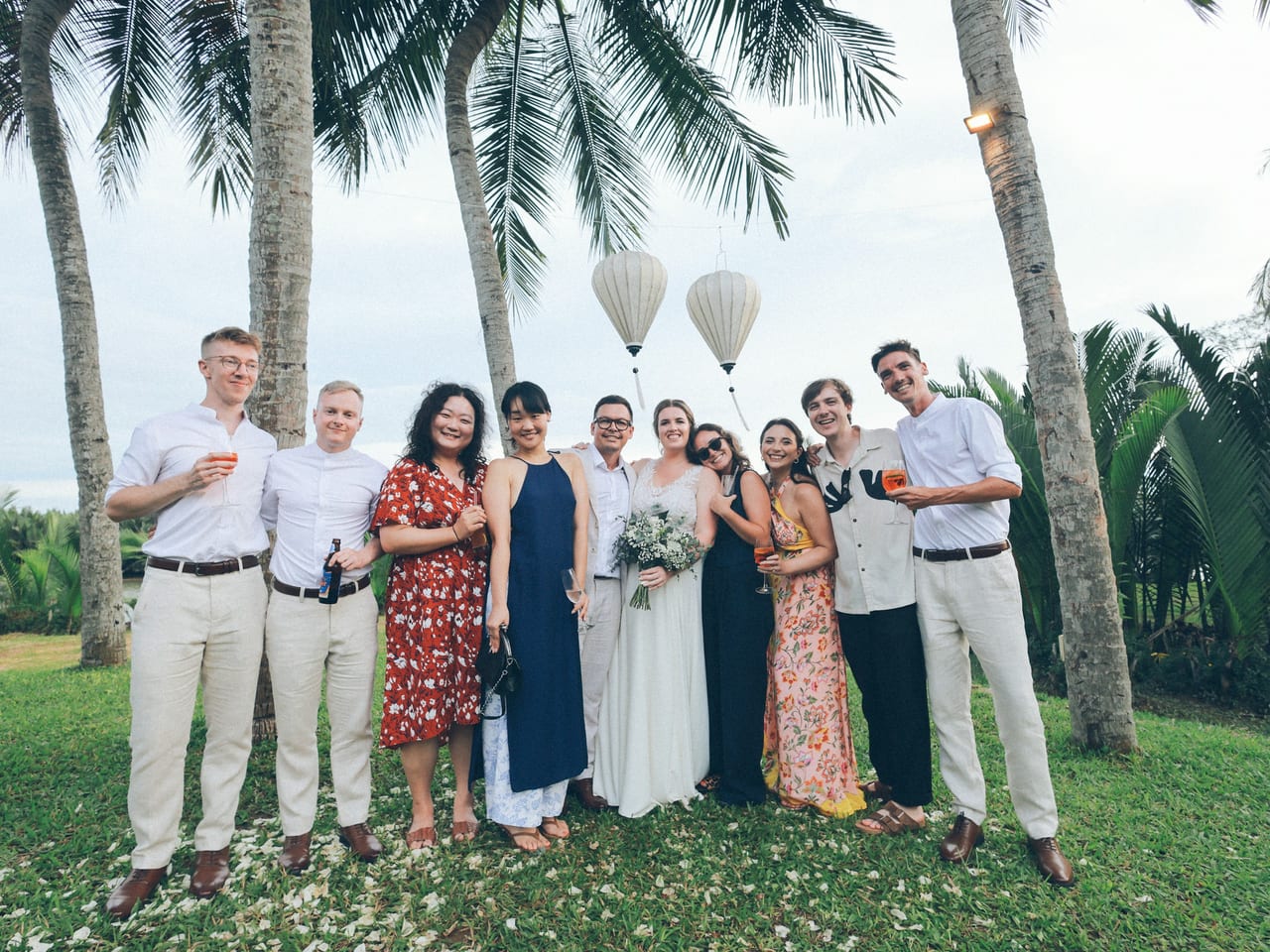
The best expression in a group photograph belongs to someone. The best group photograph belongs to everyone.
That is why group-photo culling becomes slow. Your eye lands on the central subject, approves the frame, then discovers a blink at the edge. You move to the next photograph, forget who failed in the first, and begin the same inspection again.
Stop inspecting photographs. Compare people.
Start with the frame, not the faces
First remove candidates with problems no face can rescue: a broken arrangement, a blocked key subject, an unusable crop, a lighting failure, or a composition that cannot carry the group. This should leave a small set of structurally sound photographs.
Do not zoom into every face in every frame from the original sequence. Technical thoroughness is not useful when applied to candidates that were never viable.
Build a face matrix
Put the finalists together, then inspect one person across all candidates before moving to the next person. Start with the people whose success is essential to the photograph, but always finish the edges of the group.
This changes the memory problem. Instead of remembering twelve people while moving between photographs, you answer a series of small comparisons: in which candidate does this person look most present, natural, and usable?
Closed eyes are only the easy failure
Blink detection is useful because eye state is visible and mechanical. A face can pass that check and still fail the photograph: attention drifts, a smile tightens, a child turns away, someone speaks mid-frame, or the expression simply does not belong with the rest of the group.
Judge the social photograph, not a collection of open eyes. The aim is a frame where the group feels together—even when not every person is looking directly at the camera.
Use an order of consequence
- Key subjects: the people the photograph exists to serve.
- Children and fast-changing expressions: the least repeatable faces.
- Edges and partially obscured people: the easiest failures to overlook.
- Everyone else: eyes, expression, focus, and connection to the group.
This is triage, not a statement of human importance. If the central couple fails, the family formal fails. If an uncle at the edge fails in every frame, you may still have a strong base for a repair.
Choose the base before planning the repair
When no candidate wins outright, select the photograph with the strongest overall arrangement and the fewest consequential problems. Mark a donor frame only if it contains a plausible replacement for the failed face or gesture. Then move on.
The cull chooses the photograph worth repairing. It does not perform the repair.
Keep a second frame only for a reason
A backup can be sensible for an important formal, especially before retouching is complete. A second delivery can also work when the group genuinely changes—formal and laughing, camera-aware and candid. Two almost identical files do not create emotional variety because two people smiled half a millimetre differently.
Check the group in the final set
After choosing each formal, return to the collection. Make sure every required combination exists, names or notes align with the right files, and repeated groupings have not crowded out candid relationships elsewhere in the gallery.
Cullibrate’s Face survey brings face crops from the candidates into one review surface, while Survey keeps the complete photographs beside each other. You can judge the people without losing the group they belong to.